
Why Use Headings and a Table of Contents?
Using headings helps organize your document and allows Word to automatically generate a Table of Contents.
Benefits include:
✅ Improved document organization
✅ Easier navigation
✅ Automatic Table of Contents creation
✅ Automatic TOC updates when content changes
Creating Headings
Step 1: Select Your Heading Text
- Open your Word document.
- Highlight the text you want to use as a heading.
Step 2: Apply a Heading Style
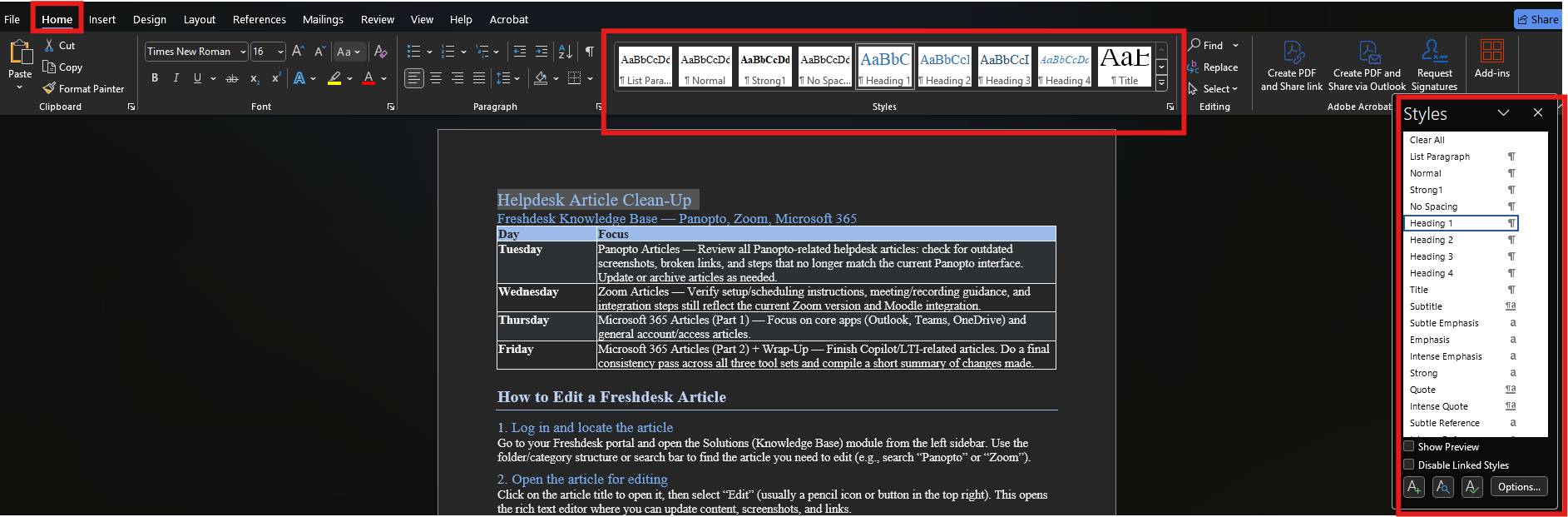
- Select the Home tab.
- In the Styles group, choose:
- Heading 1 for main sections
- Heading 2 for subsections
- Heading 3 for subtopics
Example Structure
Heading 1
- Introduction
- Conclusion
Heading 2
- Background Information
- Methodology
Heading 3
- Survey Results
- Discussion
Step 3: Repeat for Additional Sections
Apply the appropriate heading style throughout your document.
Example:
Heading 1   Introduction
Heading 1   Research Findings
Heading 2   Student Survey Data
Heading 2   Faculty Survey Data
Heading 1   Conclusion
Creating a Table of Contents
Step 4: Place Your Cursor
- Click where you want the Table of Contents to appear.
- This is typically at the beginning of the document after the title page.
Step 5: Insert the Table of Contents
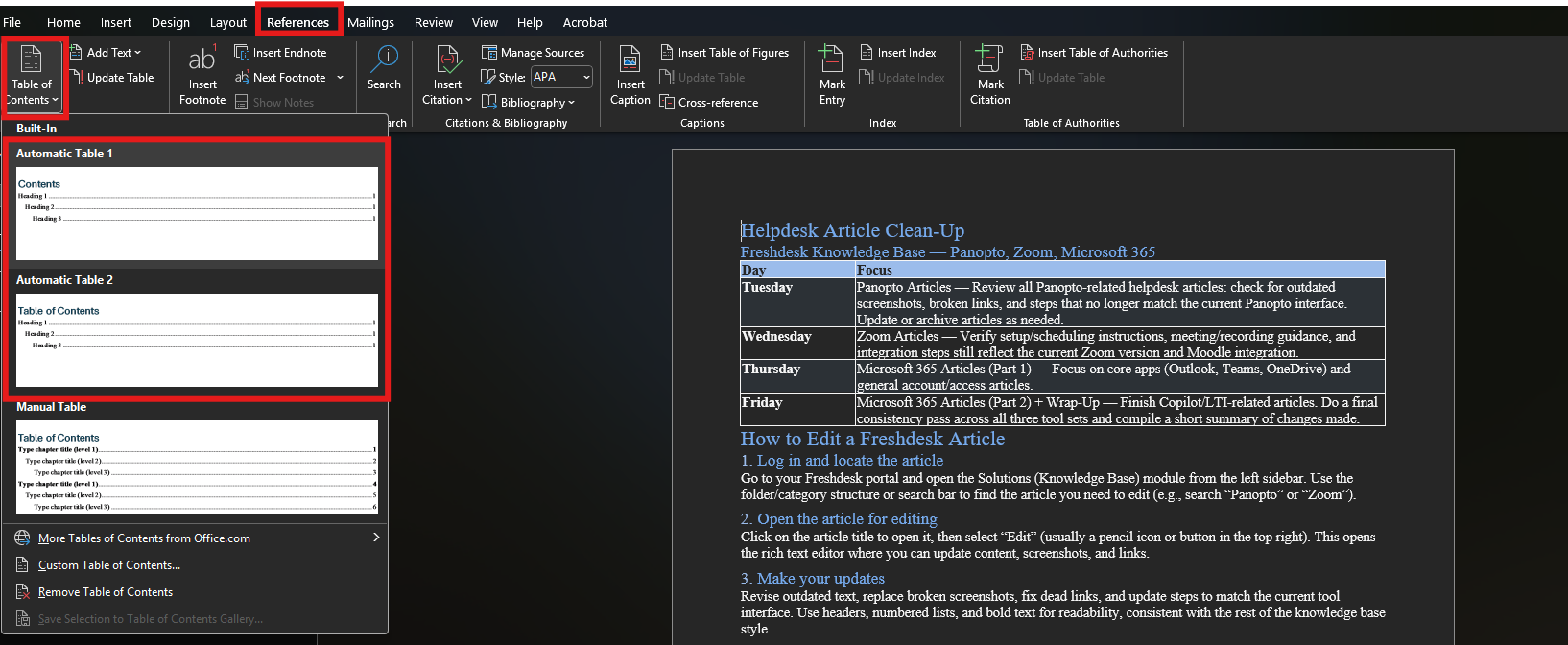
- Select the References tab.
- Click Table of Contents.
- Choose an Automatic Table option.
Word will generate a Table of Contents using the heading styles applied throughout the document.
The page numbers are created automatically.
Updating the Table of Contents
If you add, remove, or rename headings:
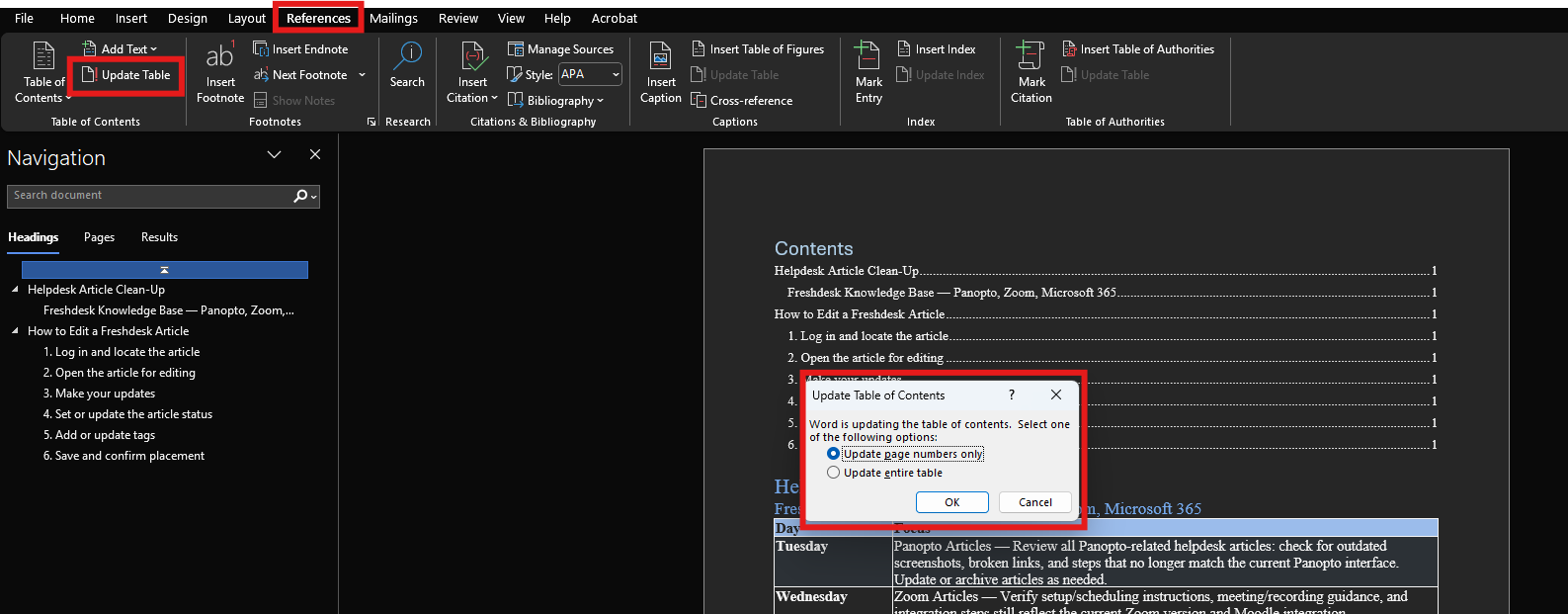
- Click anywhere inside the Table of Contents.
- Select Update Table.
- Choose one of the following:
Update Page Numbers Only
Use when page numbers have changed but headings remain the same.
Update Entire Table
Use when headings have been added, removed, or renamed.
- Select OK.
Navigating with Headings
You can quickly move around your document using the Navigation Pane.
Step 6: Open the Navigation Pane
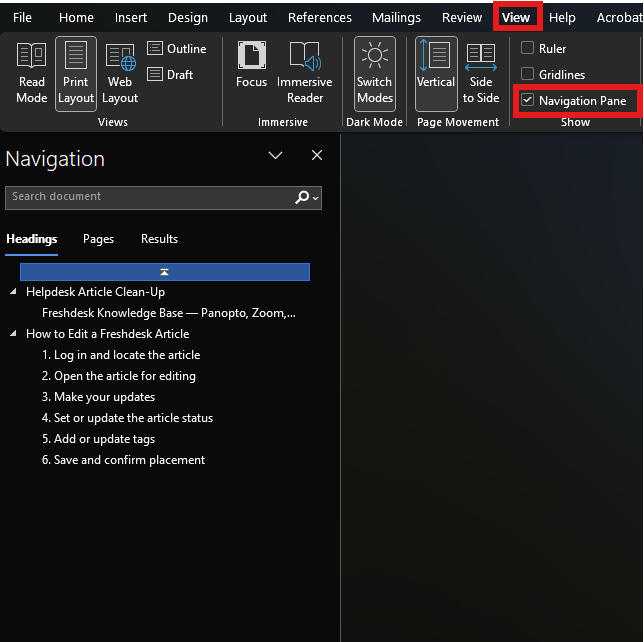
- Select the View tab.
- Check Navigation Pane.
The pane will display all headings in your document.
- Click any heading to jump directly to that section.
Best Practices
✅ Use Heading 1 for major sections
✅ Use Heading 2 for subsections
✅ Keep heading styles consistent throughout your document
✅ Insert the Table of Contents after your title page
✅ Update the Table of Contents before printing or sharing your document